

Augmenta Unreal Client
Augmenta is the most efficient and fastest system to deploy interactivity in space. You can read more about them on their website: https://augmenta.tech/
The problem it solves
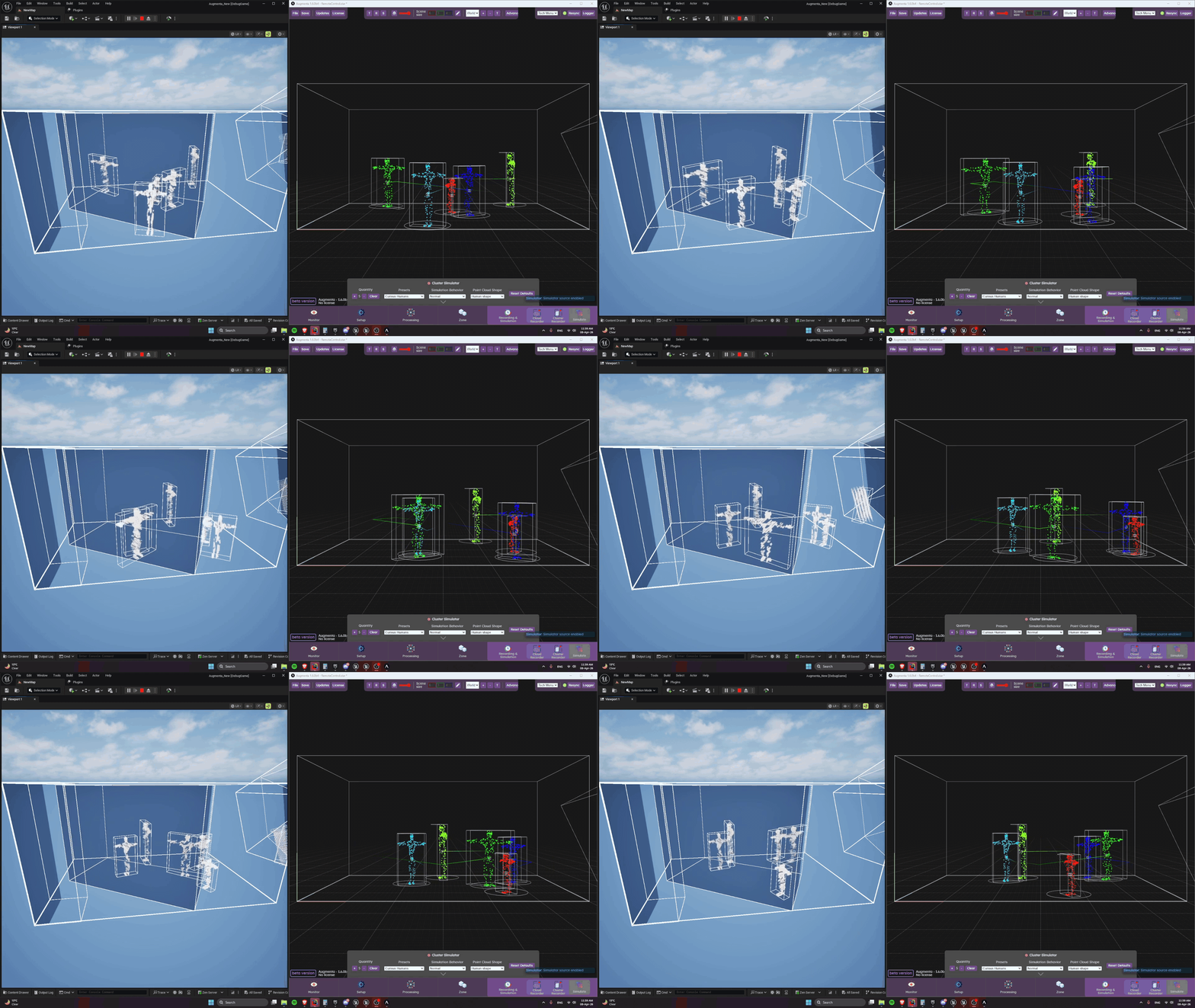
Augmenta provides rich tracking data about how people move and interact inside immersive spaces, but that data isn’t directly available inside Unreal Engine. This project bridges that gap by connecting to the Augmenta Central Hub over WebSockets, receiving live tracking data, and streaming it into Unreal in real time. The same data can be forwarded to different 3D and creative applications such as Unity, TouchDesigner, Notch, and now Unreal. This allows artists and developers to easily use audience interactions to drive visuals, audio, and interactive experiences without having to build their own data integration pipeline.
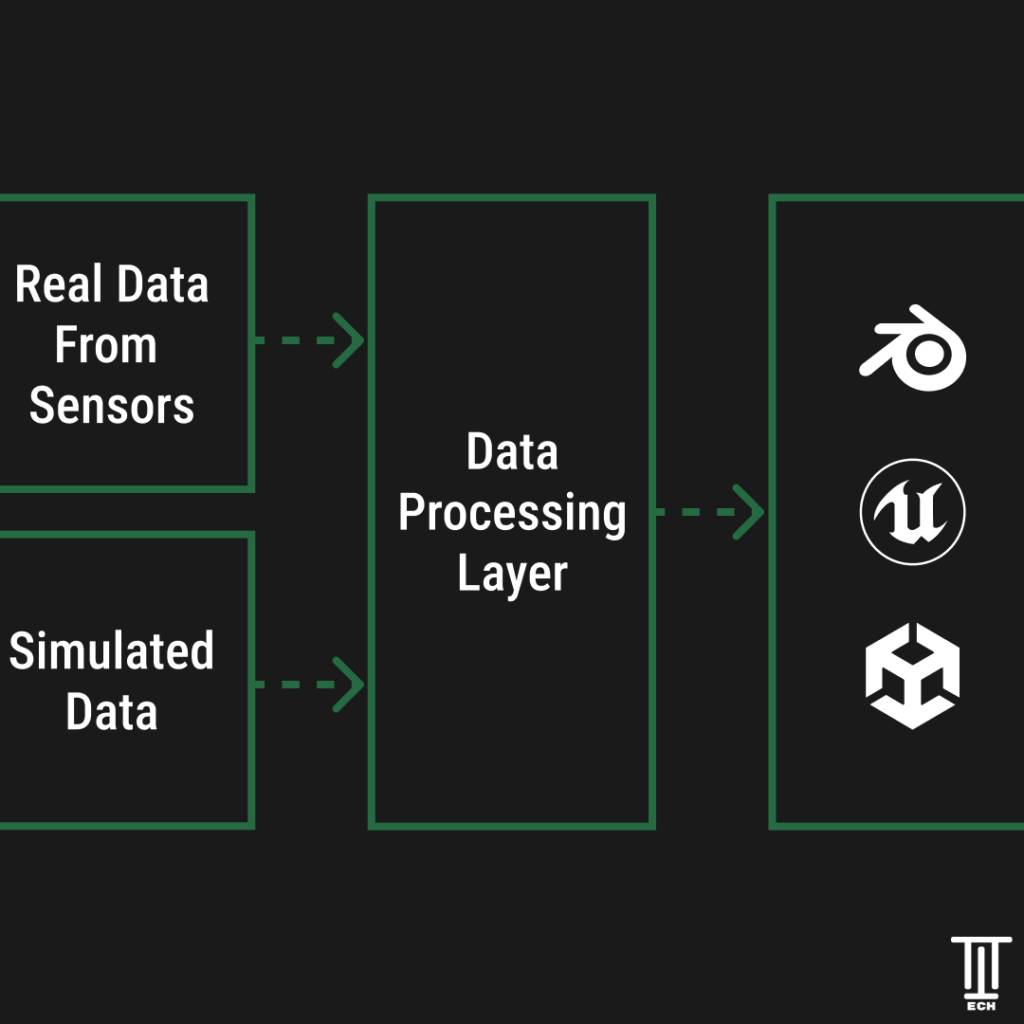
Core Integration
Custom WebSocket Integration
Developed a custom WebSocket plugin for Unreal after the built-in networking solution proved incompatible with the Augmenta server. This ensures reliable real-time communication with the Augmenta Central Hub.
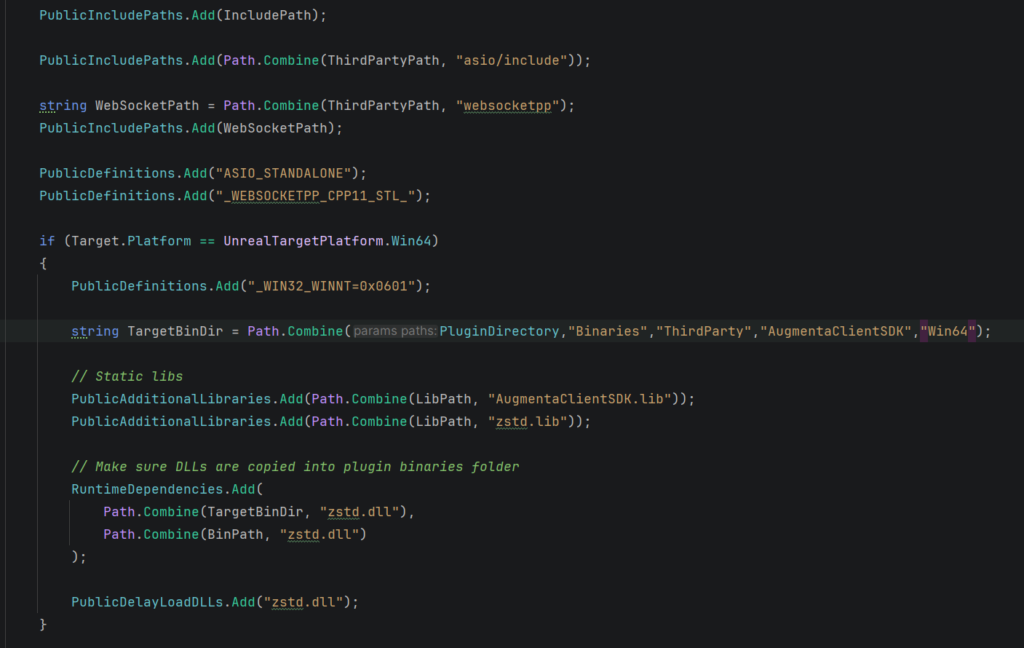
Native SDK Integration
Integrated the Augmenta Client SDK directly into Unreal by linking native .lib and .dll libraries, exposing tracking data and core functionality to the engine.
Real-Time Data Processing
Dynamic Zone Creation
Incoming JSON messages from Augmenta are parsed in real time to automatically generate and configure interactive zones inside Unreal, allowing the virtual environment to mirror the physical installation setup.
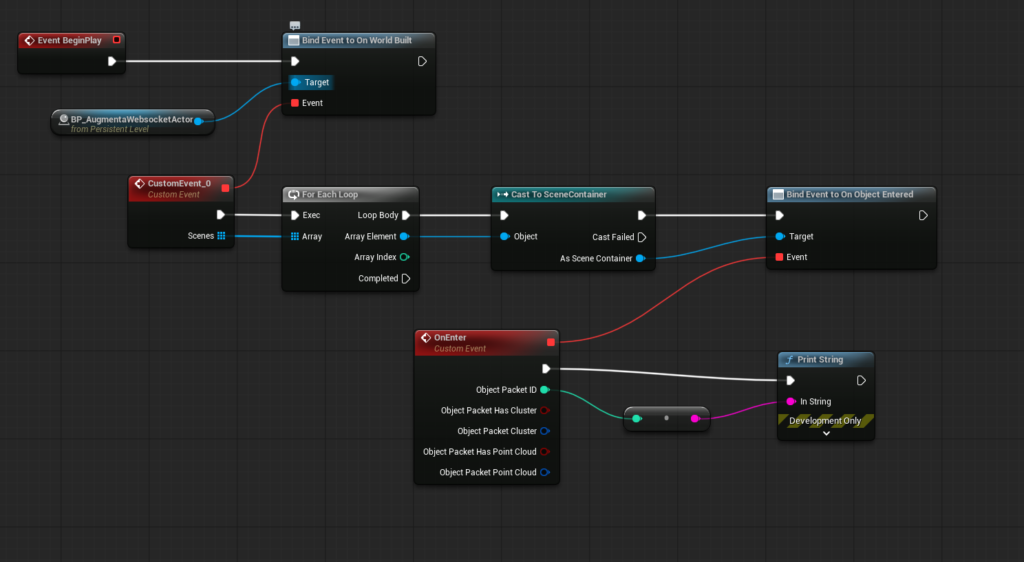
Blueprint Support
All real-time data received from the Augmenta central hub can also be accessed through Blueprints. This allows seamless integration of live swarm information directly into your system logic, enabling flexible control, visualization, and extension of drone behavior in real time.
Niagara Integration
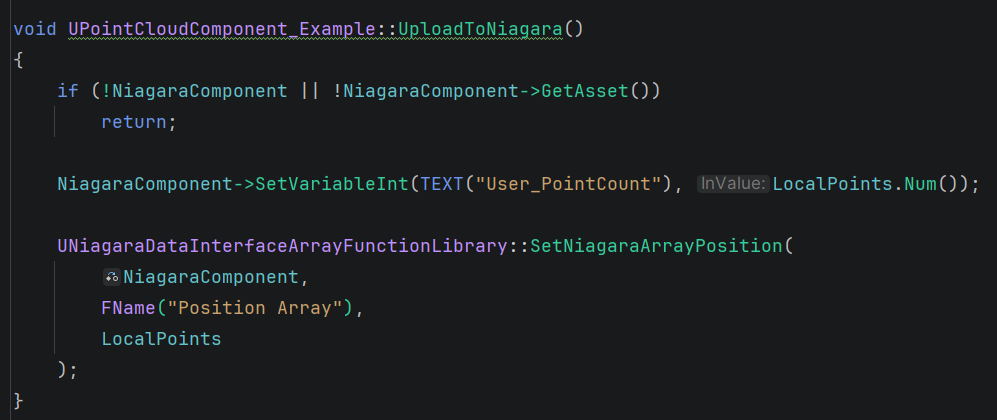
Live point-cloud data is streamed directly into Unreal’s Niagara system, enabling artists to create responsive particle-based effects driven by audience movement.
nDisplay Support
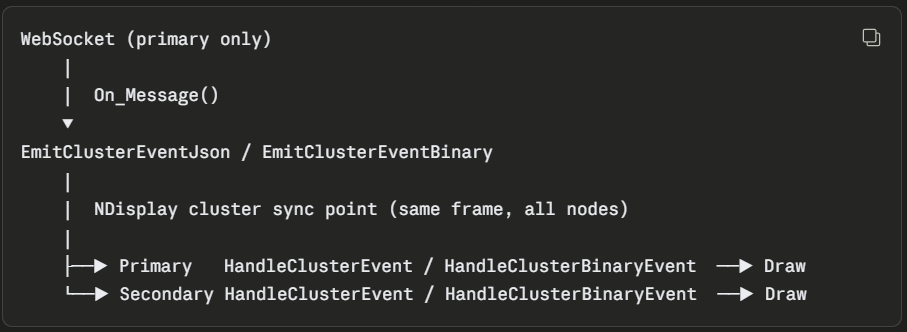
Added support for Unreal’s nDisplay framework for multi-screen and distributed installations. The primary node receives tracking data through WebSockets and synchronizes it across all render nodes, ensuring a consistent experience across the entire display cluster.